

Flying remains one of the most carbon-intensive activities in modern life. For example, a short-haul flight like Hamburg to London emits on average about 0.185 kg CO₂ per passenger-km — which adds up to roughly 130 kg CO₂ for the 700 km route. By contrast, a bus emits only about 0.027 kg CO₂ per passenger-km for the same distance - that’s ≈ 5 times lower than flying.
However, for some of us, especially in business or international work, avoiding the plane entirely may not always be an option. Still, that doesn’t mean there’s nothing we can do. Every decision around how, when, and even what we bring when we fly can make a tangible difference. By adjusting a few key habits, we can significantly cut emissions, waste, and unnecessary negative impact! And by doing so we can prove that responsible travel doesn’t mean giving up opportunities but instead: discovering new ones which can make your trip even more comfortable.
Quick summary of our tips for you how to reduce your CO2 footprint even when flying is unavoidable
- Pack light
- Choose direct flights
- Select vegetarian or vegan meals
- Bring your own cup or reuse the one you got during the flight
- Travel economy & choose newer aircrafts
- Combine business and leisure trips
- Offset only what you can’t reduce
Pack Lighter, Pack Smarter
Packing light may sound like a small gesture, yet it is a highly effective one to reduce the climate footprint of air travel. It not only makes your trip more comfortable since you do not have to carry around a heavy suitcase, but it also influences your impact. Every kilogram of luggage adds to the aircraft’s total weight and, as a result, to the amount of fuel required for the journey. According to emission models, each additional kilogram of luggage produces roughly 0.36 g of CO₂ per kilometre on a typical medium-haul flight. While that number seems small, the cumulative effect is astonishing:
Imagine a plane with 150 passengers flying approximately 5,000 kilometres - roughly the distance from Berlin to Dubai or from Paris to Montreal.. If each traveller carries 25 kilograms of luggage, the aircraft transports a total of 3.75 tonnes of baggage. If everyone instead packed only 10 kilograms, the total drops to 1.5 tonnes - a reduction of 2.25 tonnes. Over the entire flight distance, that weight difference would save around 4 tonnes of CO₂. That is roughly equivalent to the emissions produced by driving a mid-sized petrol car more than 30,000 kilometres - almost a full trip around the planet.
Reducing luggage is not only about cutting down on clothing or shoes. Coordination and collaboration among travellers can further amplify the benefit. When colleagues or family members travel together, they can share items like sun cream, shampoo, chargers, or adaptors instead of everyone bringing their own. Many personal care or electronic items can also be borrowed at the destination - hotels and accommodations frequently provide towels, hair dryers, or irons. Another tip: make a list of items and clothes you took with you and did not use. That way you can plan better next time.
Quick Take: Pack Lighter, Travel Smarter
If 150 passengers each reduce their luggage from 25 kg to 10 kg on a 5,000 km flight, they save around 4 tonnes of CO₂ – roughly the same as driving a car almost once around the world.
Choose Direct Flights Whenever Possible
Another significant lever to reduce emissions lies in the way you plan your journey. Non-stop flights are substantially more efficient than those involving stopovers because take-offs and landings are the most fuel-intensive phases of flight. Studies suggest that a direct connection can emit about 20 to 25 percent less carbon dioxide than an itinerary that includes a layover on the same route.
Take, for instance, a traveller flying from Hamburg to New York. The indirect option via Frankfurt covers roughly 7,200 kilometres and produces around 1.2 tonnes of CO₂ per passenger. The direct Hamburg–New York flight covers only about 6,200 kilometres and releases closer to one tonne of CO₂. The difference - 200 kilograms per traveller - represents a meaningful saving, particularly when hundreds of passengers are on board.
When a layover is suggested within the same country, the more sustainable choice is to take a train to the hub airport and continue directly from there. In Europe, for example, a three-hour train ride from Hamburg to Frankfurt emits a fraction of the carbon of a short domestic flight.
Beyond the numerical savings, direct flights often mean shorter travel times and fewer airport transfers, which reduce ground-related emissions such as shuttle transfers and taxi rides. They also make travel less physically taxing: frequent flying, especially with multiple stopovers, has been linked to increased fatigue, dehydration, and disrupted sleep patterns due to changing time zones and prolonged sitting. Reducing unnecessary connections not only lowers your environmental footprint but also supports your overall well-being and recovery during business travel.
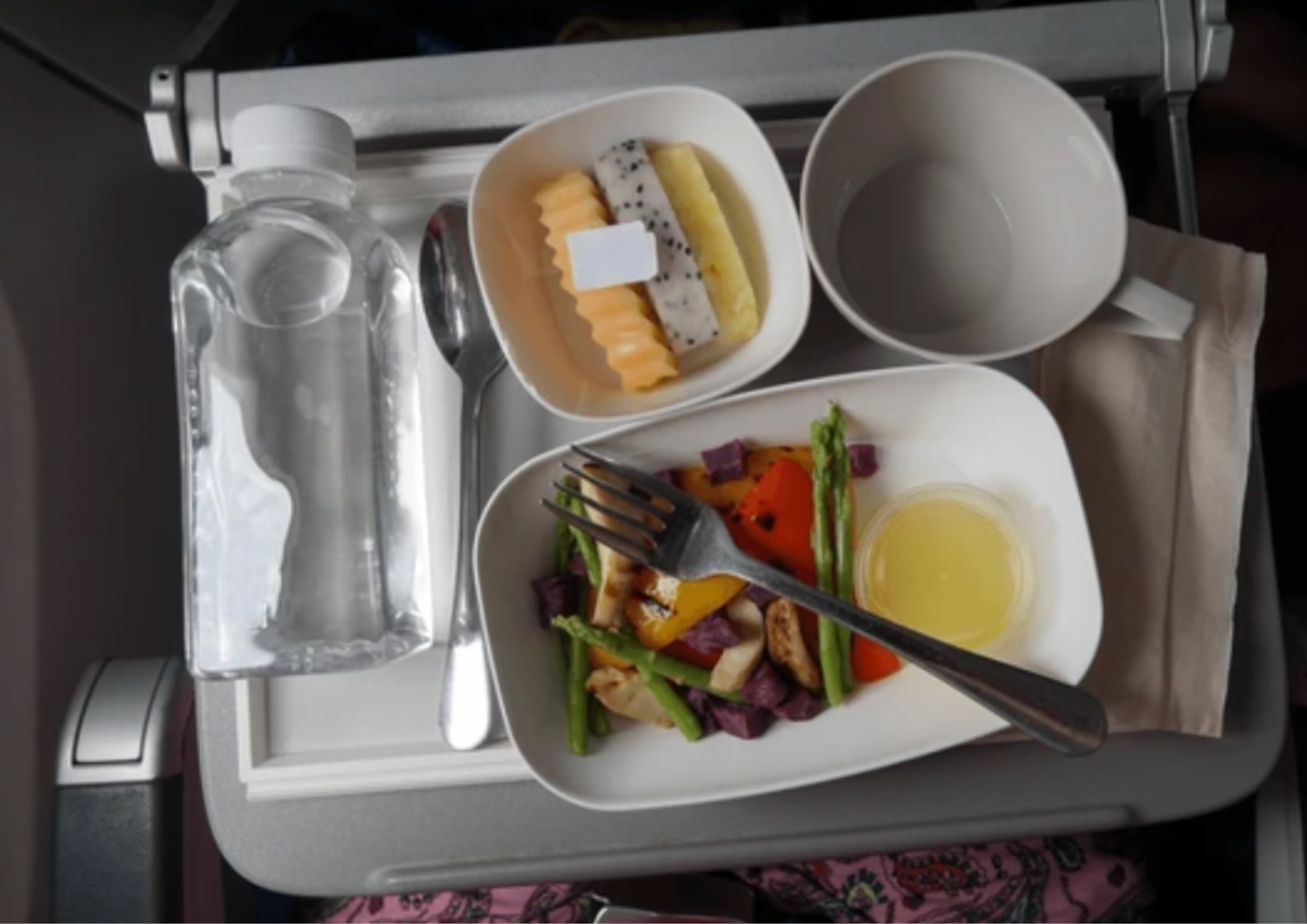
Rethink Your In-Flight Meal
Although the flight’s fuel use dominates its environmental footprint, food also plays a role. The type of meal served in the air can influence emissions more than many passengers realise. A vegetarian or vegan in-flight meal produces half to a quarter of the carbon emissions of a meat-based one. On a full aircraft, that reduction adds up quickly. If 300 passengers switch from a meat menu to a vegetarian one, the total savings can reach several thousand kilograms of CO₂ on a single flight.
Choosing vegetarian or vegan options when booking your ticket is therefore one of the easiest ways to contribute to more sustainable air travel - and it only needs one klick during the check-in process - often you even have a choice between several vegetarian and vegan options and can already look forward to your delicious dish. The choice sends a signal to airlines as well. If enough travellers consistently select the lower-carbon-footprint option, carriers shift their default menus offering more climate-friendly catering at scale. Beyond the climate dimension, these meals often use ingredients with shorter supply chains and fewer preservatives, creating benefits for both the environment and your health.
Annoyed by wasting 5 plastic and 3 paper cups per flight? Even if this appears to be a very small in-flight habit, holding out your used cup to the flight attendant instead of automatically accepting a new one has a huge impact. You don’t need to mix your coffee and orange juice, of course, but every cup saved reduces waste. And if you travel often, bring your own reusable coffee-to-go cup. It’s sturdier, more pleasant to drink from, and makes the cabin feel a little more like home.
Top tip: Bring your own coffee tumbler on your flight -
it makes your seat feel a little more like home, reduces waste, and ensures you already have a cup ready for your stay upon arrival.
Other travel decisions that matter
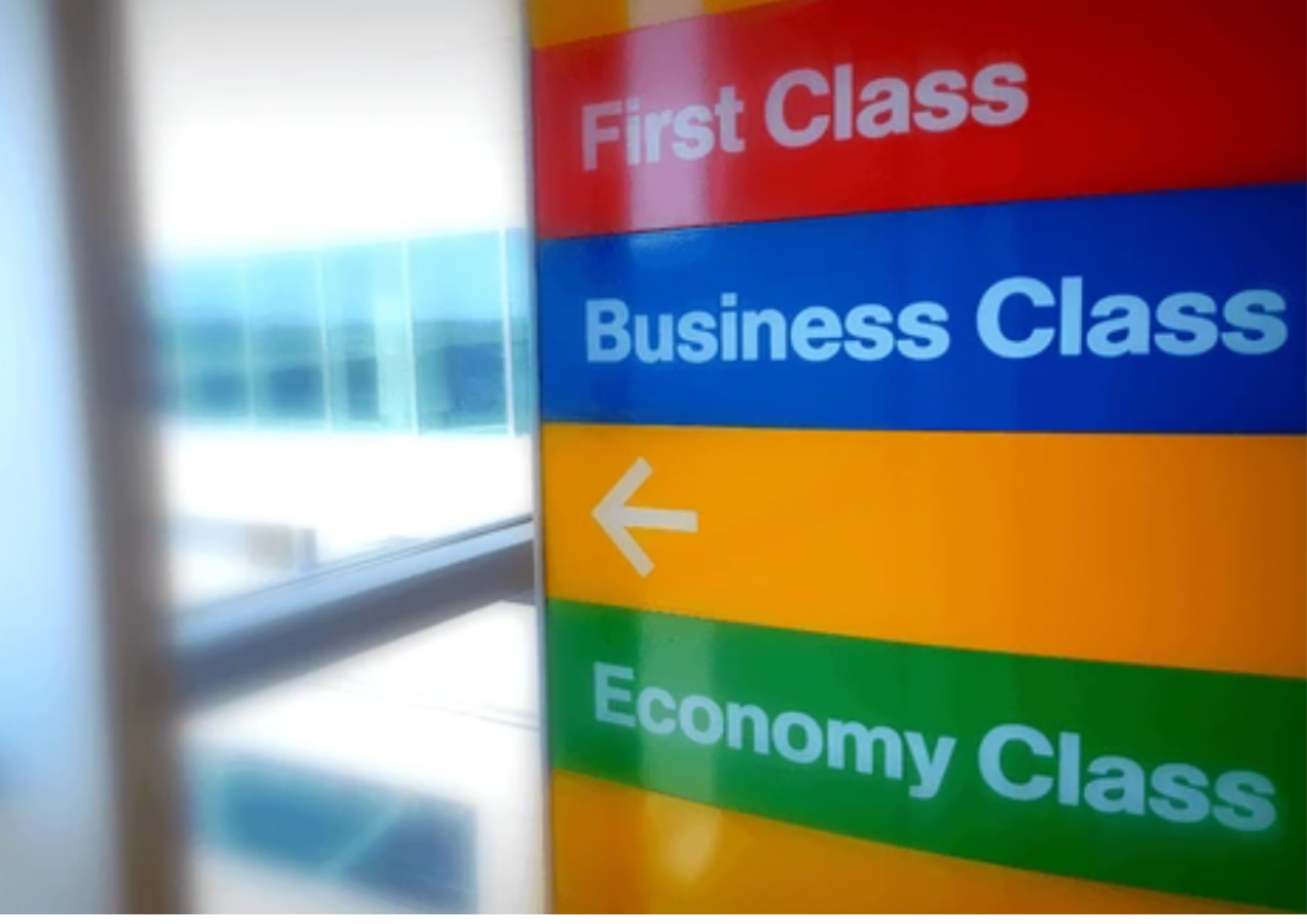
Even after optimising luggage and meals, other elements of air travel still affect your footprint. The class you travel in, for example, significantly changes your personal share of emissions. Flying economy emits roughly 0.13 to 0.20 kilograms of CO₂ equivalents per kilometre per passenger, while business or first class needs up to four times as much due to greater space allocation. Travelling in economy therefore remains one of the most effective ways to reduce your flight-related emissions without altering the destination itself.

Workation and Family-Business-Combinations
Another strategy is to consolidate your trips. Rather than flying several times a month for short meetings, combining multiple appointments into one longer stay can cut total emissions dramatically.
Business meetings in Japan and your kids love Mangas? Combine your business and leisure travels this year and do not only save time but also money and emissions. Chance to work remotely? Combine two business meetings who may be a week apart and do some Workation, staying in the country and discovering even more from the culture in place. This even helps you understand your business partners better and improves your company's environmental footprint.
Finally, offsetting remains an option, though it should always come after minimizing Certified carbon-offset programs can be a positive contribution, e.g. by funding renewable energy or reforestation projects, but reductions made before flying are the only reliable and immediate action. Experts caution that offsets are most effective when they complement - not replace - direct action to cut emissions.


Putting the Numbers into Perspective
The easy, small actions described above can take on greater meaning:
If you pack lighter, take a direct flight, select a vegan or vegetarian meal, and travel in economy, you could reduce your personal footprint by as much as 30 to 40 percent compared to a business-as-usual trip. Across a company or institution, where dozens of employees fly regularly, this difference translates into several tonnes of avoided carbon each year.
Become a Changeleader
Equally important is the ripple effect. When individuals demonstrate sustainable choices as mentioned they influence corporate policies and normalise responsible travel behaviour. Over time, these habits shift demand and encourage airlines and travel providers to offer more efficient, lower-impact options. Lastly, consider the social aspect of sustainable travel. Awareness of how your choices affect others, choosing airlines which treat their employees well, have a diverse workforce and offer inclusive travel enabling people with disabilities a comfortable flight - supports those taking social measures and encourages them to go further in that direction. That way you can show allyship and change the lives of others!

Sustainable travel is not about guilt - it’s about agency. The next time you book a flight, consider what you can do to make that journey lighter, shorter, cleaner, and kinder to the planet and society. Each conscious choice sends a signal: that travel can still connect people and ideas, without costing the Earth.

Amanda
My name is Amanda, I love traveling and discovering new cultures, but I also enjoy the simple moments, like reading a book or taking a walk while listening to music. Diving into different cultures is what I love most about traveling around the world!