

At ChargeHorizons, we are committed to empowering queer leisure travelers, supporting businesses in fostering inclusivity for their LGBTQIA+ employees during work trips, and helping accommodations become safe, welcoming spaces for all. In this mission, we are thrilled to partner with Welcoming Out, a pioneering initiative dedicated to creating visibility and allyship for queer individuals.
In this article, Markus Hoppe, CEO and co-founder of Welcoming Out, shares his insights on why acceptance is a cornerstone of queer travel. With a background in social work and a decade of experience in community education, Markus has been a driving force in promoting diversity and inclusion. His work with Welcoming Out, backed by over 60 prominent companies and public figures, highlights the transformative power of allyship and visibility in making experiences truly inclusive. Let’s explore how acceptance shapes the journey for queer travelers and why it matters more than ever.

It’s often the moment at the reception desk that says everything - before anyone speaks. A smile that hesitates for a second. A quick, assessing look when two men check in together or when a woman mentions her partner’s female name. Not outright rejection, but a subtle distance you can feel.
Tolerance can sound friendly, yet it carries a kind of separation. At its core, it means enduring something you view with skepticism or don’t fully understand. In conversations about diversity, tolerance is often framed as the goal - when in truth, it’s only the starting point.
To tolerate something is to allow it to exist without valuing it.
Acceptance, by contrast, means welcoming diversity as part of one’s world.
Between these two attitudes lies an invisible yet crucial difference: Tolerance enables peaceful coexistence. Acceptance creates belonging.
And especially when traveling, navigating unfamiliar situations and social spaces, that difference becomes tangible. People can often sense, even before the first word is spoken, whether they are genuinely welcome or merely being accommodated.
Tolerance vs Acceptance
Tolerance is often interpreted as a sign of openness. Strictly speaking, however, it is about enduring something you do not fully approve of - without actively pushing back. It is a legal and social minimum standard, helpful for maintaining peaceful coexistence, but not much more. Acceptance goes a step further: it’s a conscious decision to recognize diversity as equal, perhaps even as enriching. While tolerance allows people to sit at the same table, acceptance is what makes a real conversation possible.
You might say:
Tolerance lets someone take a seat.
Acceptance invites you to listen.

In everyday life, and especially in tourism, these lines blur. Many businesses claim to be “tolerant,” display rainbow symbols, or highlight openness in their marketing. But genuine attitude doesn’t reveal itself through campaigns. It shows up in interactions: in the language people choose, the questions they ask, and the atmosphere they create.
Travel places us in new environments: geographically, socially, atmospherically. And that’s exactly where the line between being tolerated and truly being welcomed becomes visible. A hotel can appear friendly and still signal distance: a queer couple may receive a double room yet sense they’re being quietly evaluated; staff may remain polite but hesitate the moment a same-sex partnership becomes visible.
In this context, tolerance says: “You’re allowed to be here.” Acceptance says: “We’re glad you’re here.”
For queer travelers, that difference is anything but trivial. It shapes whether a stay feels relaxed or draining, whether people can be themselves or retreat into familiar self-protection.
Many queer travelers have learned to look closely before they arrive:
How does this place handle diversity? Are staff trained? Are clear expectations set? Do guest reviews suggest safety and ease?
In this sense, acceptance isn’t a “nice extra.” It’s a quality marker. Where acceptance is genuinely felt, trust increases - and with it satisfaction, loyalty, and a higher likelihood of returning or recommending the place to others. That makes queer-inclusive businesses not only safer, but also more appealing to a much wider audience.
One might put it this way:
Tolerance prevents complaints.
Acceptance creates enthusiasm.

From Good Intentions to Lived Practice
Many businesses have begun engaging with diversity and inclusion. Yet acceptance shows up not in symbols, but in details: in the language people choose, they respond at the front desk, and in whether queer guests are naturally included rather than treated as exceptions. The real challenge often lies within the organization. Not every employee shares the same personal beliefs - and they don’t have to. What they do need is orientation: clear expectations, support, and structures that provide confidence. Professionally, tolerance means preventing discrimination and not leaving people alone in difficult or uncertain situations. What can be done? Create full acceptance via employees who grasp not only that queer guests exist, but why it matters that they can travel safely and without hesitation. Awareness trainings, team conversations, and guest stories are just a few examples which can build important bridges.
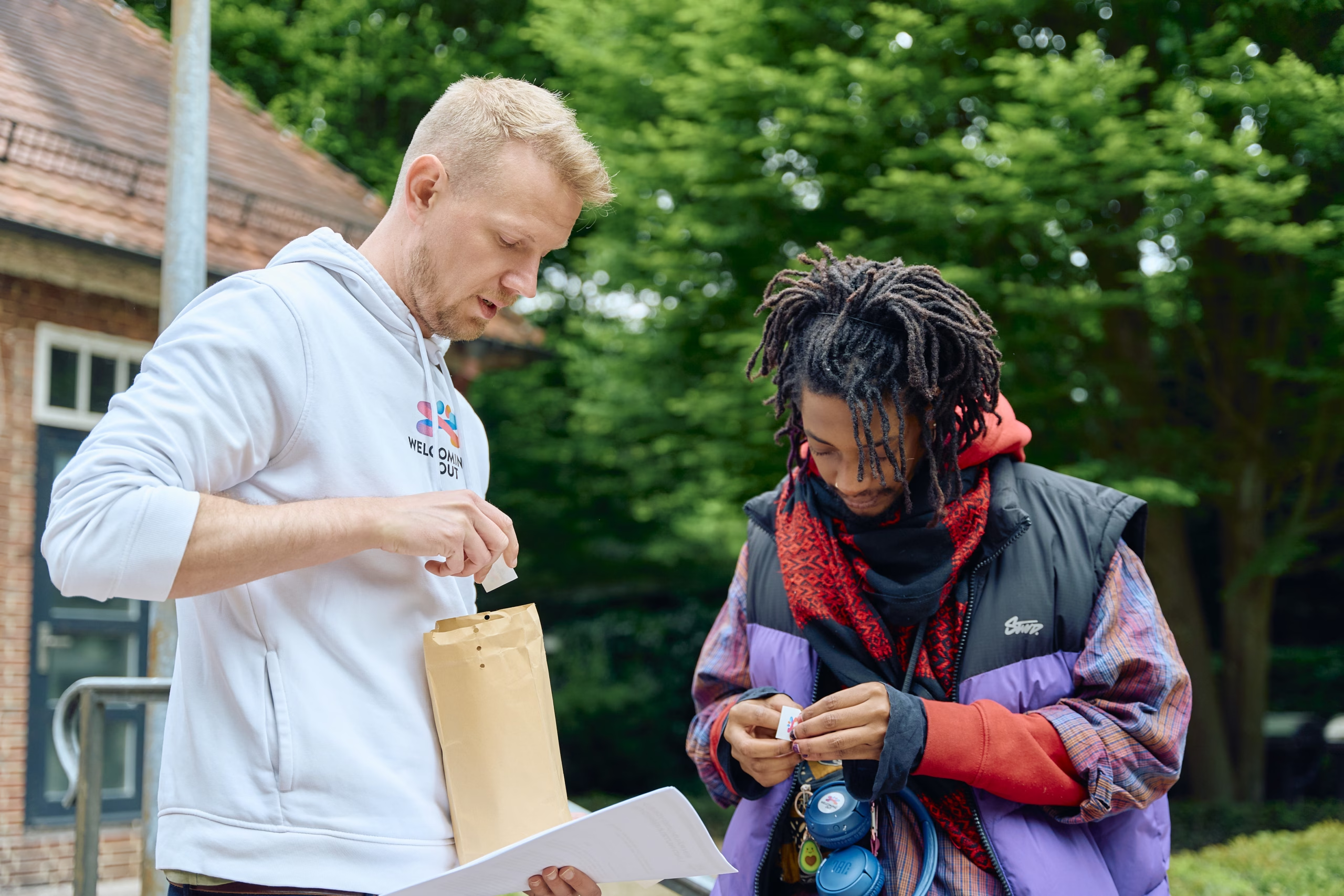
One example of lived acceptance is WELCOMING OUT: a symbol - worn as a button or sticker - that allows employees to show allyship voluntarily and personally. It gives people in guest-facing roles a subtle way to signal safety without needing to say much. And organizations can support this by making the symbol available and encouraging its use without turning it into a mandate.

Acceptance has measurable economic effects, often stronger than expected.
Why Acceptance Is a Real Success Factor
When we talk about acceptance in tourism, the focus is often on values and interpersonal dynamics. But beyond the ethical dimension lies something equally relevant: acceptance has measurable economic effects, often stronger than expected. Queer travelers are among the most active and loyal segments in global tourism. Research consistently shows they travel more frequently, make more deliberate choices, and willingly pay for places where they feel safe and respected. Even more significant is their decision-making pattern: destinations and brands that demonstrate genuine commitment to equality are favored and recommended. Loyalty grows where people feel seen.
A second group matters just as much: younger, non-queer travelers. For many in Generation Z, values influence purchasing decisions. They look for authenticity, responsibility, and social awareness. And with their economic influence rising, acceptance is no longer seen as a political stance but as a marker of professionalism and modern hospitality.
The ripple effects extend even further. Organizations that take diversity seriously, not as a seasonal message but as part of their internal culture, tend to perform when competing for talent. Not only queer applicants, but also potential employees who have queer friends or socialize in a diverse friend group, pay close attention to social aspects at their workplace. Employees who feel safe stay longer, contribute more, and shape an atmosphere that guests immediately sense.
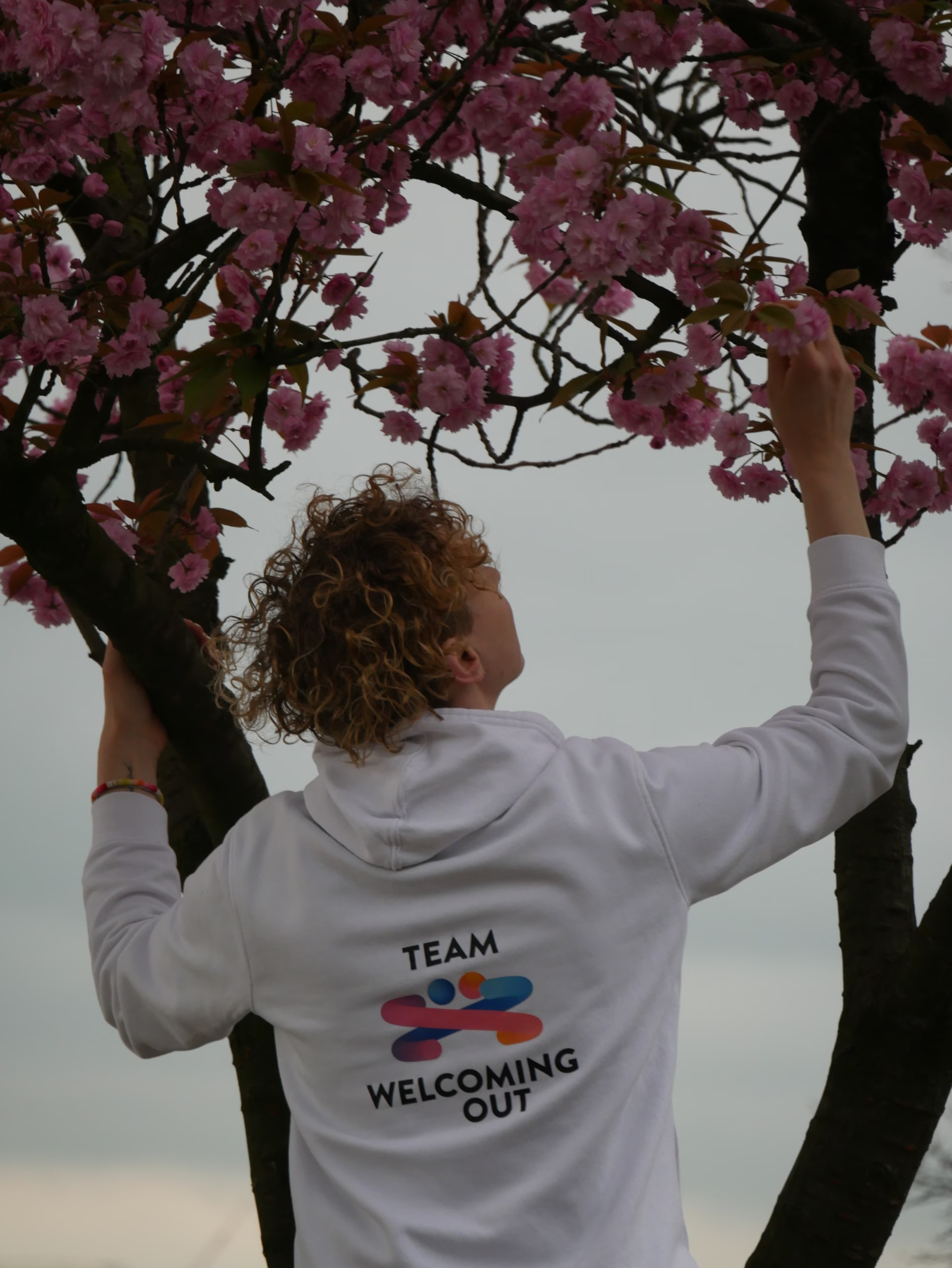
Acceptance is not a decorative value - it is a strategic advantage. A place that truly practices acceptance isn’t just visited. It is remembered, revisited, and recommended. And that is what makes it sustainably successful.

The How In The Transformation
For many accommodations, this demand raises genuine questions: How do I communicate sensitively without being intrusive? How do I offer safety without crossing personal boundaries? How do I handle mistakes without becoming defensive? These small, situational decisions form the line between tolerance and acceptance.
Our tips:
A key step lies in challenging automatic assumptions. Most uncomfortable situations don’t stem from ill intent, but from habits: defaulting to gendered greetings, assuming who belongs together, or assigning relationship roles without asking. Neutral, open language can shift the dynamic immediately. A simple question like, “How would you like to be addressed?” communicates more acceptance than any symbol on a wall.
Handling uncertain or tense moments is equally important. Discrimination is rarely loud. It often begins in glances or comments that only some notice. Employees don’t need dramatic interventions, but they can remain attentive and offer support in a quiet, professional way, without escalating. Sometimes a soft, “Let me know if you need anything,” is enough to restore safety.
Mistakes will happen. Misgendering, incorrect assumptions, awkward phrasing: none of this makes acceptance impossible. What matters is the response. Correct it, don’t justify it. Listen rather than explain. That builds trust and shows that acceptance is not about perfection but about readiness to learn.
Visible signals can reinforce this stance, as long as they remain voluntary and personal. The symbol of WELCOMING OUT works precisely because it is not a corporate badge, but a choice. Employees can use it to signal that they are a safe and supportive counterpart - without turning it into a marketing gesture.
For all this to work, employees need a supportive culture. Awareness training, clear expectations, and space for reflection reduce pressure in moments that would otherwise feel overwhelming. Being diversity-aware doesn’t mean sharing the same personal convictions. It means knowing how to act professionally - and knowing that the organization stands behind you. In the end, it is this interplay of structural support and lived attitude that creates genuinely accepting places. You as accommodation provide the conditions. Your individual employees create the experience.


Acceptance Is Not a State but a Path
Returning to that brief moment at the reception desk, the subtle difference between being tolerated and truly being welcomed becomes clear. A space may seem friendly and still leave people feeling they should tread carefully. That is exactly where the difference between tolerance and acceptance reveals itself. And in travel, where encounters are immediate, this distinction determines whether people can show up as themselves or retreat into familiar forms of caution.
Acceptance doesn’t emerge overnight. It grows in small decisions. Those who experience what an accepting place truly feels like don’t forget it. It shifts expectations - of hospitality, professionalism, and human interaction. And it broadens the very meaning of what it is to be welcomed. At best, it turns a hesitant glance into an unforced smile: a quiet signal that people don’t need to explain who they are before they’re allowed to arrive.


Markus Hoppe
Markus Hoppe is the CEO and co-founder of Welcoming Out, sharing his passion for queer travel not only in this article but also in the work he is doing everyday with his initiative in a diverse set of industries.